Course Information
286 Plant Road
Chalk River, ON K0J 1J0
Canada
Current Status
Price
Get Started
Delivery Partner
- Canadian Nuclear Laboratories (CNL)
Course Description
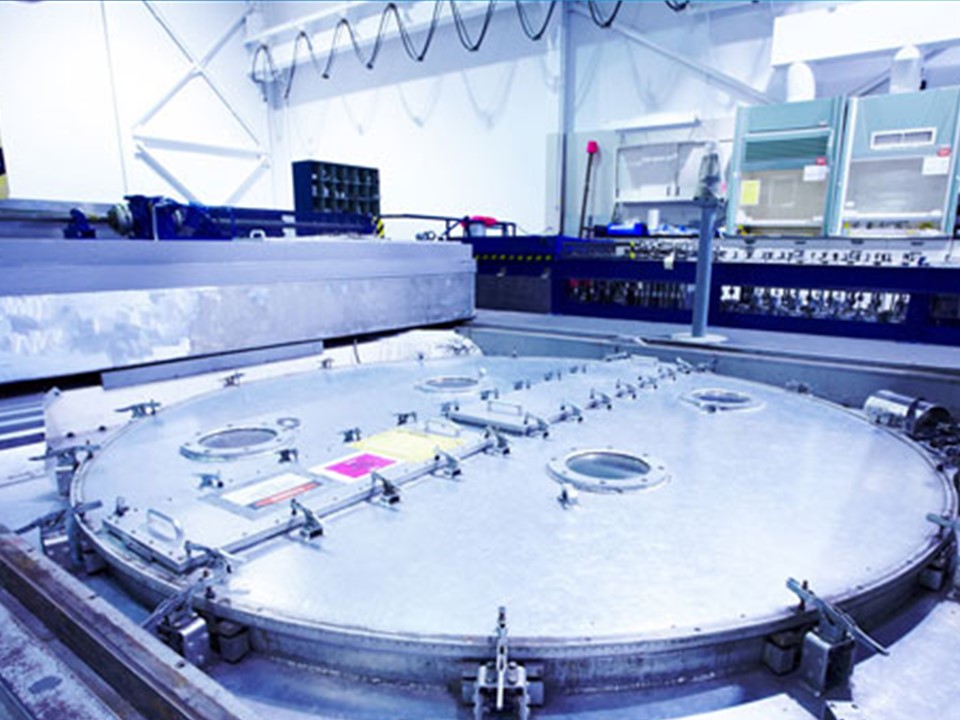
This course provides exposure to experimental reactor physics using the ZED 2 zero power research reactor. Participants explore how key reactor physics observables, such as critical size, neutron flux, and kinetics characteristics, are measured in a reconfigurable test reactor.
A morning set of lectures explain the rationale for a zero-power test reactor and the types of experiments that are conducted here. Together with an afternoon demonstration and guided activities at the ZED-2 reactor, such as an approach-to-critical, learners gain practical insight into how experimental data that supports reactor design, safety analysis, and validation of simulation tools used in modern nuclear systems is produced. Further, how experimental reactor physics competencies are used in reactor commissioning will also be covered.
Learning Outcomes / Objectives
- Understand the role of experimental data in reactor safety, design, and licensing, including the validation of modelling and simulation tools.
- Understand the role of a zero-power reactor and how it is distinct from a materials test reactor
- Describe fundamental experimental reactor physics concepts
Recognize key experimental techniques used in reactor physics research and commissioning of reactors
Target Audience
This course would be most beneficial for nuclear engineers, reactor physicists, safety analysts, reactor operations personnel, researchers, regulators, and students seeking practical exposure to experimental reactor physics. It is particularly valuable for individuals involved in reactor design, safety analysis, commissioning, licensing, modelling and simulation, and nuclear technology development.
Meet your instructor
Luke Yaraskavitch
Luke Yaraskavitch is an Applied Physicist with the Advanced Fuels & Reactor Physics Directorate at Canadian Nuclear Laboratories (CNL). His work focuses on reactor physics, nuclear analysis, and experimental research supporting the development, operation, and safety assessment of nuclear reactor systems. Through his involvement with reactor physics experiments and research reactor activities, Luke contributes to advancing the understanding of reactor behaviour and the validation of analytical and simulation tools used across the nuclear sector.
Julian Atfield
Julian Atfield is a lead experimenter and former reactor operator / facility manager with the Zero Energy Deuterium (ZED-2) reactor. He has over 15 years of experience working as an experimentalist in the facility, supporting heavy-water reactor safety and development. In this time he has written and reviewed evaluations for the OECD-NEA’s International Reactor Physics and International Criticality Safety Benchmark Evaluation Projects. He was the SLOWPOKE Physicist responsible for overseeing the successful refuel and commissioning process of the SLOWPOKE reactor at the Royal Military College of Canada (RMC) in 2021. He joined the CNL Travelling Flux Detector team in 2022, leading execution of flux mapping campaigns at multiple CANDU stations. He obtained a B.Sc. (Hons) in physics in 2007 at Trent University, Canada. Julian is also a fellow of the World Nuclear University Summer Institute that he attended in 2017.